Klipsch Flexus Core 100 vs Sharp Aquos Qled Tv 4T C55Hp7050U: Which Should You Buy?
I've owned both the Klipsch Flexus Core 100 and the Sharp Aquos QLED 4T C55Hp7050U for several months now, and I wanted to write up my experience to help you decide which one makes more sense for your setup. To be clear: these are two very different pieces of gear — one primarily an audio upgrade and the other a full-featured TV — so the right choice depends heavily on what you already have and what you prioritize. In this article I’ll walk you through what I noticed in daily use, the strengths and weaknesses of each, and concrete guidance on who should choose which.
Why I tested these together
I originally replaced an older 55" IPS TV and a basic soundbar at the same time, which is how I ended up with both the Sharp Aquos QLED and the Klipsch Flexus Core 100 in my living room. Over the past few months I alternated between using the TV’s built-in speakers alone, pairing the Klipsch soundbar to the TV with HDMI ARC/eARC, and using the soundbar with other sources (phone via Bluetooth, game console, and an older AV receiver). That gave me a practical sense of how each item performs individually and how they work together.
First impressions — setup and build
Sharp Aquos QLED 4T C55Hp7050U arrived in a large box, and the unboxing felt like a proper TV purchase: substantial stand pieces, a discreet remote, and a thin profile that looks modern on a stand or wall-mounted. The panel has a slight satin finish that cuts most reflections, which I appreciated when sunlight hits the screen in the afternoon.
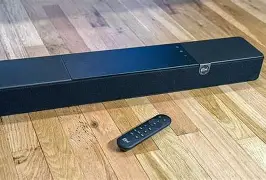
Klipsch Flexus Core 100 felt compact and well-built out of the box. The finish is matte black, and it has a pleasing weight — not flimsy. The remote is small but intuitive, and getting it connected to the TV via HDMI-eARC was straightforward. I also tried optical and Bluetooth connections during the evaluation period.
Picture quality and day-to-day TV use (Sharp)
What I appreciated about the Sharp Aquos QLED was the pop of color and brightness. After a basic out-of-the-box calibration (I used the TV's "Movie" mode and turned off energy-saving options), HDR content on streaming services looked noticeably better than my old LED TV. Skin tones felt natural in most scenes, and highlights — for example, neon signs in a night scene — had a pleasing sheen without blowing out detail.
That said, it’s not perfect. In very dark rooms, I noticed slight blooming around bright objects in a few scenes (haloing when a bright object sits against a dark background). It wasn't constant, but it’s something a critical home theater user might notice. Also, the local dimming implementation helps contrast, but you’ll still get deeper blacks from an OLED if absolute black level is your priority.
For sports and fast-moving content, the TV handled motion well after I turned on the motion smoothing and set the refresh mode for "sports" in the settings. For gaming, input lag felt low enough for casual and competitive play, though I did need to manually enable Game Mode to get the best response.
Audio performance and daily listening (Klipsch)
The Flexus Core 100 transformed how shows and movies sounded in my room. Using the TV alone, dialogue was passable but sometimes thin. Once I connected the Klipsch soundbar via HDMI-eARC, dialogue became clearer and more present without cranking volume. The midrange clarity — where most voices live — was a real step up. I was surprised by how much fuller my favorite podcasts sounded, and small details like footsteps and room ambiance in movies became easier to place.
Bass performance is respectable for the soundbar’s size. If you want chest-thumping low end, you’ll want the optional subwoofer (I added one later), but for everyday viewing and music, the Core 100 provides satisfying punch and avoids the boomy, indistinct bass you sometimes get from cheaper soundbars.
Discover deals on TVs & Home Theater — updated daily.
See Deals →One area that bothered me initially was the virtual surround processing. Klipsch's soundstage is wider than the TV's speakers, but simulated surround modes can make effects sound oddly processed in certain movies. In my experience, the best results came from keeping processing off or using a gentle "wide" mode rather than aggressive virtual surround.
Smart platform, inputs and usability
The Sharp runs a modern smart TV platform with the usual suspects preinstalled — streaming apps, casting support, and a simple app store for extra services. In my region the interface behaves like an Android-based platform; it’s responsive most of the time but occasionally lags during app updates. I found navigation intuitive and the remote’s quick-access buttons handy for jumping between Netflix, Prime Video, and local channels.
On the Klipsch side, the soundbar is simple: HDMI-eARC, optical, Bluetooth and a clear set of controls. There’s no app-driven smart platform, which is fine since it's meant to be an audio peripheral. Pairing via Bluetooth was straightforward but I preferred the HDMI-eARC path because it carried the best audio and allowed the TV remote to control volume.
Reliability and daily life
After months of use, I haven’t had any reliability issues with either product. The Sharp received a firmware update that addressed a hiccup in app loading times, and the soundbar has been rock-solid — no dropouts, no quirks. I do recommend checking for firmware updates on both units during initial setup.
Pros & Cons — Sharp Aquos QLED 4T C55Hp7050U
- Pros: Bright, vibrant QLED image; good color accuracy after basic calibration; l…
One small practical thing I noticed: using the TV remote to control volume felt seamless because eARC allowed the TV to pass remote volume commands to the bar. I did have to tweak soundbar settings to avoid aggressive processing, but once dialed in it was a low-maintenance setup.
Buying guide — what to consider before you buy
When you're deciding between the two (or whether to buy both), think about these factors I used when making my purchase:
1. What’s wrong with your current setup?
If the problem is thin, lifeless sound but the picture on your TV is still acceptable, upgrading to the Klipsch Flexus Core 100 will give you the most immediate improvement for a smaller spend. If your TV’s image is dated (washed-out colors, low brightness, poor HDR), then the Sharp TV will change the picture dramatically and likely provide more long-term satisfaction.
2. Room size and seating
For small to medium living rooms, the Core 100 covers audio needs well. For large rooms or open-plan spaces you’ll probably want a subwoofer or a multi-piece audio system. For TVs, consider viewing distance: 55" is a great middle ground for most living rooms. If you sit closer, a smaller TV might be sufficient; if you sit further away, consider a larger screen.
Find top-rated TVs & Home Theater products at great prices.
Shop Amazon →3. Content priorities: movies, sports, gaming, music
For movies, the combination of a better picture and a proper soundbar is ideal. For sports and fast action, the Sharp’s motion handling is beneficial. For gaming, prioritize low input lag and available HDMI ports; the Sharp performed well once Game Mode was enabled. For music, the Klipsch is a clear winner over TV speakers.
4. Connectivity and ecosystem
Make sure your devices (game consoles, streaming boxes, Blu-ray players) can connect without extra adapters. If you want a single remote to control everything, HDMI-eARC is helpful. Also check whether the TV supports the streaming apps you use most; if you have a preferred smart platform, validate app availability.
5. Budget and upgrade path
If your budget is limited, I would prioritize the soundbar if your TV picture is still okay. If you’re replacing an old TV and have some extra budget left, invest in a quality TV first — the picture is what you look at for hours. Ideally, if budget allows, get both: a modern QLED or OLED paired with a competent soundbar is how I ended up happiest.
6. Future-proofing and firmware
Check how the manufacturer handles firmware updates. After a firmware patch fixed a minor issue on my Sharp, I appreciated the value of ongoing support. For audio devices, verify that any promised features (like future codec support) are actually delivered in updates or are included out of the box.
Practical tips from my experience
- When setting up the Sharp, start with "Movie" or "Filmmaker" mode for the most accurate colors and then tweak brightness for your room.
- With the Klipsch, try turning off aggressive sound processing and choose a neutral EQ if you watch a lot of dialogue-centric content.
- If you sit in a bright room, favor the TV first — improved brightness and anti-glare are very noticeable during daytime viewing.
- Consider placement: the soundbar should sit close to the screen and not be blocked by a shelf lip; otherwise, dialogue clarity suffers.
- Use HDMI-eARC for best audio fidelity and simplest control. Only use Bluetooth for casual, quick connections.
Final thoughts — which should you buy?
After living with both for several months, here’s how I’d summarize the choice based on what you actually want from your setup:
- If you have a perfectly fine TV picture but boring audio: buy the Klipsch Flexus Core 100 first. It’s the fastest way to make your existing setup feel renewed, especially for dialogue-heavy content, music, and podcasts.
- If your TV is the weakest link — washed-out color, poor HDR, or it's just old — buy the Sharp Aquos QLED 4T C55Hp7050U. The jump in picture performance is immediate and obvious.
- If you can afford both, buy the TV and pair it with a quality soundbar (the Klipsch I tested pairs nicely). Together they provide the most satisfying at-home entertainment experience I’ve had in this price bracket.
In my living room, the combination of the Sharp TV and Klipsch soundbar ended up being the right balance: bright, impactful images plus clear, engaging audio. I was surprised by how much difference a modest soundbar made to my daily viewing, and I appreciated the sharper image the TV brought to films and games. One thing that bothered me at first was the virtual surround mode on the Klipsch — but once I adjusted the settings, it became a non-issue. Overall, for most people shopping in this category, I'd recommend thinking about which weakness you want to fix first — picture or sound — and then choose accordingly.
Whatever you choose, take the time to update firmware, switch to neutral picture modes for accuracy, and pair a great audio solution with a good picture. After several months of testing, that combination delivered the most enjoyment in my home.